

- SKU: BAC-030-MH
- Category: Peptides
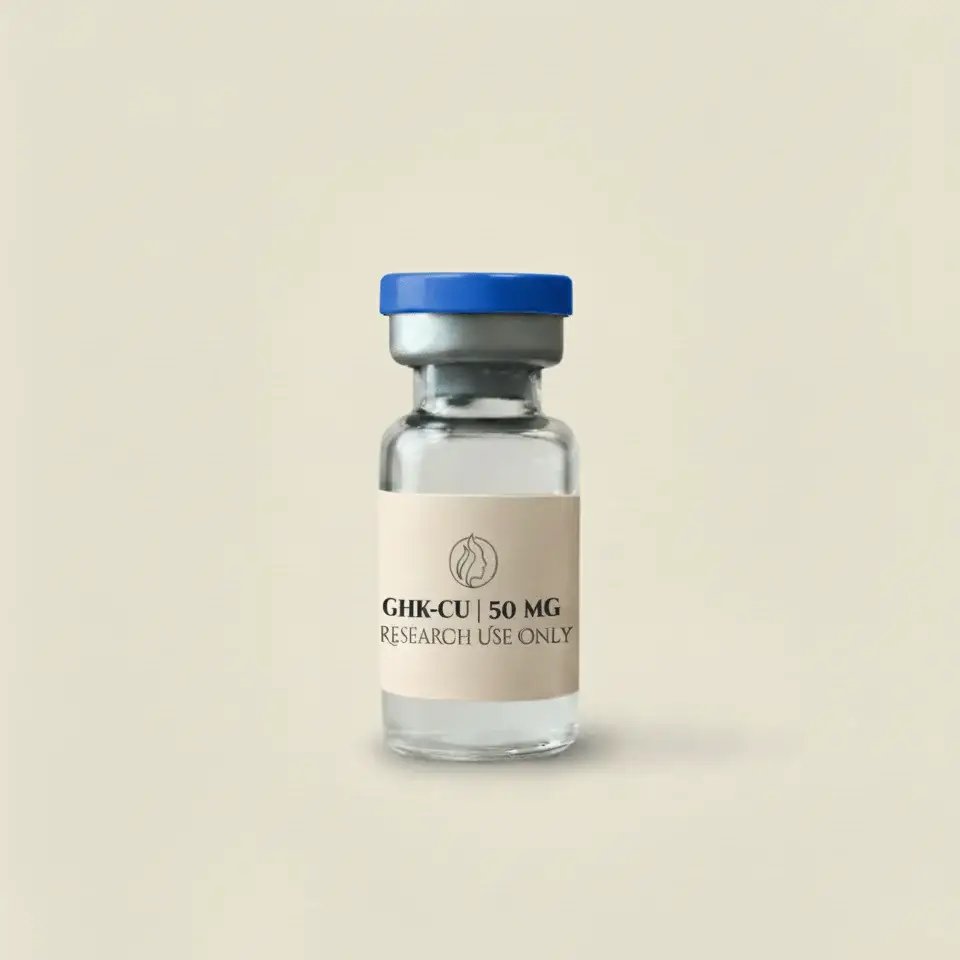
GHK-CU
Price range: $39.00 through $49.00- Type : Copper Tripeptide for Regenerative Research
- Vial : Borosilicate Glass
- Purity : 98%+ verified by 3rd party testing
GHK-Cu Peptide – Copper Tripeptide for Regenerative Research
GHK-Cu (glycyl-L-histidyl-L-lysine copper) is a naturally occurring copper-binding tripeptide widely studied for its potential roles in tissue repair, skin health, hair growth, and anti-aging pathways. Research indicates GHK-Cu may influence wound healing, collagen production, and cellular regeneration, making it one of the most versatile peptides in cosmetic and biomedical studies.
Our GHK-Cu peptide is manufactured to the highest purity standards and validated by third-party testing, making it a reliable option for researchers exploring regenerative medicine, dermatology, and hair restoration models.
Key Features:
- ≥98% purity, third-party verified
- Copper-binding tripeptide with regenerative and cosmetic research interest
- Studied for skin health, hair growth, and anti-aging effects
- Secure production, handling, and shipping with strict quality control
Disclaimer: For laboratory research purposes only. Not intended for human consumption, medical, or veterinary use.

FAQs
See MoreMost peptides we supply are available at high purity levels suitable for research use. For advanced experiments requiring minimal impurities, highly pure peptides (>98%) may be preferred.
The visual appearance of peptides can vary based on sequence composition, hydrophobicity, and the lyophilization process. Some peptides may look fluffy and white, while others may appear glassy, crystalline, or nearly invisible. Regardless of appearance, every vial is carefully weighed using an analytical balance.
Some peptides are delivered in small amounts that may not be visible to the naked eye, may adhere to the vial wall, or may absorb moisture during shipping. Centrifuging the vial and dissolving the powder in solvent ensures full recovery.
Peptides are delivered in lyophilized powder form (freeze-dried), sealed in vials for stability. This is the standard and most reliable delivery method for research use.
Each vial label typically includes the product name, quantity, purity, and lot number. Additional details, such as sequence or molecular weight, may be provided upon request.
